


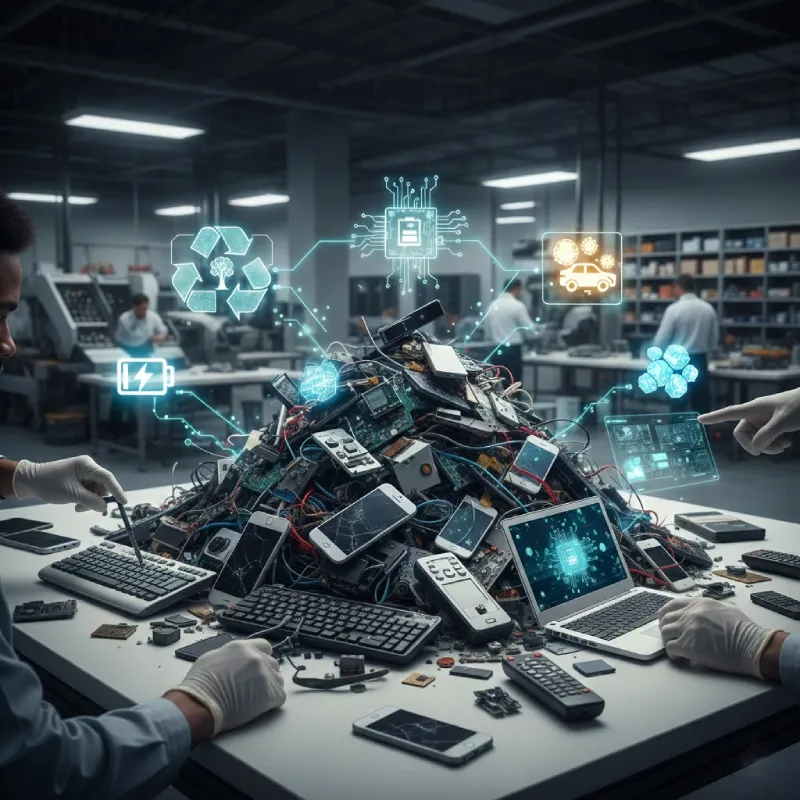
Electronic waste is quickly becoming one of the fastest-growing pollution problems globally. Recycling efforts cannot keep up with consumption. Much of the discussion focuses on improving disposal systems, but experts warn that the real solution starts long before a device reaches a recycling bin. The issue, they say, lies in the technology’s design itself.
A recent global report on electronic waste reveals a troubling reality. Landfills are filling up with discarded smartphones, laptops, appliances, and industrial electronics. These devices not only take up space but also contaminate soil and water. At the same time, they contain valuable minerals that are becoming harder to find. The gap between what is discarded and what could be recovered is growing increasingly apparent.
The Hidden Value Buried in E-Waste
A worldwide analysis from 2022 found that electronic waste contained about 68 billion pounds of recoverable metals, including copper, nickel, iron, and small amounts of gold. The total estimated material value of this e-waste was over $91 billion, a staggering number considering how little is currently recovered.
Formal recycling operations managed to recover around $28 billion in material value. Informal recyclers, often in unsafe conditions in developing areas, recovered another $12 billion. Even this combined total of $40 billion is far below the potential locked within discarded electronics.
Adding to the concern is the overall cost. When considering environmental damage, health effects, and long-term harm to ecosystems, the global e-waste issue results in an annual net loss of almost $40 billion. If current trends continue, this deficit could rise to $40 billion annually by 2030.
Recycling experts argue that the focus on e-waste often centers too much on metal value alone. While these figures are important, they often overshadow the dangers posed by hazardous chemicals, lower yields of precious metals in modern devices, and increasing processing costs. Many recyclers find the economics don’t work, leading them to resell used equipment rather than dismantle it.
Why Disposal Is Only Part of the Issue
Industry insiders stress that focusing only on end-of-life handling misses the root cause. Many businesses view e-waste as a logistical problem rather than a resource that can be managed thoughtfully. Procurement departments often prioritize short-term production needs over long-term sustainability, which turns disposal into an afterthought.
For many organizations, sending equipment to landfills or scrap facilities is faster and cheaper than exploring reuse, repair, or responsible recycling. Internal teams managing inventory often lack the authority or resources to handle electronic waste properly, which merely shifts the problem downstream.
Meanwhile, consumers add to the crisis. Each individual produces about 18 pounds of e-waste each year, mostly made up of small devices that often go unrecycled due to inconvenience or lack of awareness.
One of the most dangerous misconceptions is the idea that e-waste is a “gold mine.” In truth, the recoverable amount of precious metal in a single device is very small. Modern electronics use less gold and fewer valuable materials than older models, reducing the financial incentive for recyclers. At the same time, costs for labor, transportation, and compliance are rising.
Global Progress Remains Uneven
Despite these challenges, some regions and industries are making headway. Trends in scrap metal prices provide a baseline value that can support recycling for certain industrial assets. New technologies are emerging to help determine whether equipment should be resold, refurbished, or dismantled.
Some companies use smart software to evaluate whether reselling a device would yield a better return than scrapping it for metal. This strategy boosts value while cutting down on waste. Even when resale isn’t feasible, many assets can still be processed to achieve positive net returns.
Still, global efforts remain fragmented. Although some organizations are trying out reuse marketplaces or sustainability-oriented procurement systems, few platforms directly address the design stage, where many environmental challenges begin. Without guidance for engineers early in development, products continue getting made without considering recyclability, repairability, or material recovery.
One challenge is that companies often engage consultants who lack expertise in electronics engineering. As a result, scalability between industries is limited, and sustainability solutions are inconsistent.
Designing for Reuse and Recovery
An increasing number of innovators believe the only sustainable solution is to include recyclability in the design process. Some new platforms score product designs based on their recyclability, repairability, and reuse potential before manufacturing starts.
Advocates argue this change is vital because electronic waste is more than just an environmental issue; it is becoming an economic one. Growing demand for critical minerals, supply chain constraints, and high extraction costs have made resource recovery an urgent priority.
Designers are faced with a tough balancing act. Performance expectations for modern devices are rising, which requires more complex materials and components. However, as many raw materials become scarcer and pricier, manufacturers need new strategies for planning their use. Poor design decisions today result in costly waste later on.
By introducing recyclability scoring before production, designers can make more informed choices that reduce future waste and improve the device’s long-term sustainability. This approach could also lower production costs over time, especially as rare materials become harder to obtain.
Sustainability Starts With Procurement
Experts say procurement departments play a significant but often overlooked role in cutting down e-waste. Planning for a device’s lifespan must begin at the purchasing stage, not once it becomes obsolete.
Enterprise technology teams increasingly turn to refurbished equipment to solve supply chain issues and save money. In many fields, repaired or reused parts keep production lines running when new parts are unavailable.
However, internal buying practices often work against sustainability. Decentralized purchasing across different facilities leads to excess equipment and varied standards. Buyers are usually motivated to minimize upfront costs instead of considering long-term waste or operational efficiency.
Organizations can significantly reduce e-waste by coordinating procurement strategies, planning for redeployment, and avoiding unnecessary purchases. While this may sound straightforward, it requires cultural and operational shifts across various departments.
Government regulations could also speed up progress. Europe’s recent Ecodesign for Sustainable Products Regulation (ESPR) is likely to encourage manufacturers to create products that are repairable, durable, and recyclable. Such policies can increase demand for sustainable electronics and foster a culture of reuse.
A big part of the issue is a lack of visibility; many organizations simply do not know how much waste they produce, what can be repaired, or what needs to be recycled.
New Innovations in E-Waste Recovery
Regulators, investors, and consumers are increasingly urging companies to be clear about how they deal with electronic equipment at the end of its life. This pressure is motivating more businesses to track their devices, extend product lifespans, and adopt designs that are easy to repair.
Organizations in the recycling field are also innovating, particularly when it comes to overcoming the “last mile” problem — collecting devices from homes, offices, and labs before they end up in the trash. Most e-waste recovery efforts fail at this stage.
Some sustainability startups have launched programs that use zero-emission methods — such as electric cargo bikes and autonomous robots — to collect outdated devices directly from users. By making disposal easy and local, these systems boost collection rates and ensure valuable equipment gets to refurbishers instead of landfills.
This local approach also offers economic advantages. By directing devices to nearby repair centers and processing facilities, communities keep jobs and value while cutting transportation-related emissions.
The Road Ahead: A System Built for Circularity
The global e-waste issue can’t be resolved through disposal and recycling alone. The crisis starts upstream — in product design, procurement choices, consumer habits, and supply chain structures.
A real solution requires:
- Designing electronics for repair, reuse, and recyclability
- Smarter procurement practices that prevent unnecessary purchases
- Expanded infrastructure for reuse and refurbishment
- Convenient collection systems to prevent devices from going to landfills
- Regulatory frameworks that encourage sustainable design decisions
As electronic consumption continues to increase, the world must move from a linear model — make, use, discard — to a circular one, where devices are designed for multiple lifespans.
E-waste is no longer simply a disposal problem. It is a design challenge, a policy challenge, and an economic opportunity waiting to be realized. Tackling it now will determine whether the future of technology is sustainable or just unsustainable waste.