

Nvidia is focusing more on open source and open AI, indicating a long-term strategy that goes beyond hardware to include the essential software and models shaping the future of artificial intelligence.
On the same day, the semiconductor giant announced its acquisition of SchedMD, the company behind Slurm, one of the world’s most popular open-source workload management systems. At the same time, Nvidia unveiled a new family of open AI models intended to support the next generation of autonomous, agent-based AI systems.
These announcements reflect Nvidia’s growing ambition to establish itself not only as a leading supplier of AI hardware but also as a significant player in the open ecosystems built on top of it.
A Quiet but Strategic Acquisition
Nvidia confirmed its acquisition of SchedMD, which has managed Slurm, an open-source workload manager that has become essential in high-performance computing (HPC) and AI environments.
Launched in 2002, Slurm is used worldwide to manage and schedule workloads across large compute clusters. It plays a crucial role in making sure complex AI training tasks, scientific simulations, and large-scale data processing run smoothly across thousands, sometimes millions, of processing cores.
SchedMD was founded in 2010 by Slurm’s lead developers, Morris Jette and Danny Auble. Auble, who is currently the CEO, has been involved with the project since its inception.
While Nvidia did not disclose the financial details of the acquisition, the company stressed one key point: Slurm will remain open source and neutral.
This assurance is significant for research institutions, national laboratories, universities, and businesses that depend on Slurm for their most sensitive and mission-critical workloads.
Why Slurm Matters to AI
At first glance, Slurm might not seem as exciting as advanced AI models or next-gen GPUs. However, for those running large-scale AI systems, it is essential.
Slurm is responsible for:
- Allocating compute resources among users and teams
- Scheduling AI training and inference tasks
- Managing queues, priorities, and failures
- Maximizing the use of expensive hardware
As generative AI models become larger and more complex, managing compute efficiently becomes as crucial as the models themselves.
Nvidia noted that it has collaborated closely with SchedMD for over a decade. In its announcement, the company called Slurm “critical infrastructure” for modern AI workloads and stated that the acquisition will enable it to invest more in enhancing Slurm’s support across different computing environments.
The message was clear: Nvidia aims to ensure that the software controlling AI workloads develops alongside its hardware plans.
Keeping Open Source at the Core
One of the most closely watched aspects of the deal was Nvidia’s commitment to keeping Slurm open source.
In recent years, open-source communities have grown increasingly cautious about large tech companies purchasing key infrastructure projects, fearing vendor lock-in or closed development.
Nvidia directly addressed those concerns by stating that Slurm will continue to be:
- Open source
- Neutral
- Governed in a way that benefits the wider community
This strategy aligns with Nvidia’s broader message about open innovation—a theme that also appeared in its second announcement that day.
Introducing the Nemotron 3 Model Family
Along with the acquisition news, Nvidia introduced Nemotron 3, a new family of open AI models aimed at developing agent-based AI systems—models that can reason, plan, and act on their own in complex situations.
According to Nvidia, Nemotron 3 is its most efficient family of open models yet, designed to offer strong reasoning performance while reducing computational demands.
The model family is structured to cater to varying levels of complexity:
- Nemotron 3 Nano: A compact model tailored for specific, resource-efficient tasks.
- Nemotron 3 Super: Designed for multi-agent applications where several AI systems must work together, coordinate, or negotiate.
- Nemotron 3 Ultra: The most powerful version, intended for complex reasoning and advanced autonomous tasks.
This tiered approach allows developers to choose the appropriate model for their needs rather than relying on one oversized system.
Nvidia’s Vision for Open AI
In announcing Nemotron 3, Nvidia’s leaders positioned openness as a key strategy rather than a minor focus.
“Open innovation is the foundation of AI progress,” the company’s CEO stated in the announcement. He underscored that Nvidia views Nemotron as part of a larger effort to turn advanced AI capabilities into an open platform that developers can examine, modify, and deploy at scale.
This viewpoint is significant.
While many top AI models remain proprietary, Nvidia believes that:
- Open models will drive adoption
- Transparency will build trust
- Efficiency will become more important than sheer size
As AI systems increasingly integrate into physical infrastructure, vehicles, and industrial environments, those attributes are becoming vital.
A Pattern of Open Releases
The Nemotron announcement did not happen in isolation. In recent months, Nvidia has consistently increased the frequency of its open AI releases.
Just last week, the company launched a new open reasoning vision-language model focused on autonomous driving research. This model was created to help systems better understand and navigate visual environments—an essential requirement for self-driving cars and robotics.
Additionally, Nvidia expanded its tools and documentation around its Cosmos world models, released under a permissive open-source license. These models enable developers to simulate and reason about physical environments, helping AI systems learn and plan in virtual worlds before acting in the real world.
Together, these releases illustrate a coherent strategy rather than isolated efforts.
The Bet on Physical AI
At the heart of Nvidia’s open-source push is a broader strategic commitment to physical AI.
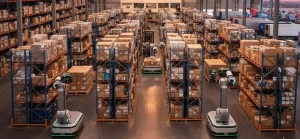
Physical AI refers to systems that do more than generate text or images—they interact with the real world, such as robots, autonomous vehicles, drones, and smart machines in factories, warehouses, and cities.
These systems require:
- Massive computing power
- Highly efficient scheduling and management
- Reliable, transparent models
- Close integration between software and hardware
Nvidia believes it is uniquely suited to provide all of these components.
By combining:
- GPUs and specialized AI accelerators
- Open workload management software like Slurm
- Open, efficient AI models like Nemotron
- Simulation and world-modeling tools
the company aims to become the primary platform for creating the “brains” behind physical AI systems.
Why Open Source Makes Strategic Sense
At first glance, Nvidia’s focus on open source might seem surprising for a company that sells hardware at premium prices.
But strategically, it offers several benefits:
- Encourages widespread use of Nvidia-compatible workflows
- Reduces challenges for developers and researchers
- Centers vital infrastructure around Nvidia-supported ecosystems
- Positions the company as a neutral facilitator rather than a barrier
In the long run, open software can boost demand for the underlying hardware, especially when that hardware is optimized for the software.
A Subtle Shift in Power
There is also a more subtle implication in Nvidia’s actions.
As AI becomes central to economic and national infrastructure, control over foundational tools like workload managers and reasoning models is increasingly crucial.
By investing in open, widely adopted systems rather than proprietary ones, Nvidia is embedding itself deeper into the core of AI development—spanning research labs and startups to governments and major industries.
That influence does not come from locking users in but from becoming essential.
Looking Ahead
Nvidia’s acquisition of SchedMD and the launch of Nemotron 3 indicate a clear direction: the future of AI will rely on open foundations while also running on specialized, high-performance hardware.
Rather than treating open source as just a marketing tactic, Nvidia seems to be integrating it into the core of its long-term strategy—from scheduling AI workloads to how models reason and how autonomous systems engage with the physical world.
If physical AI genuinely represents the next frontier, Nvidia is positioning itself not just as a chip supplier but as the infrastructure company that shapes how that future is built.