

Deepfakes are no longer just an occasional threat found in viral videos or prank phone calls. As artificial intelligence tools become more powerful, cheaper, and easier to access, organizations in various fields are facing a new reality: identity itself is at risk.
What once needed advanced technical skills can now be done with standard AI models and a laptop. Criminals, government agents, and organized fraud groups are using fake voices, images, documents, and online identities to undermine trust on a large scale. This leads to a rapidly growing type of cyber risk that avoids traditional defenses by targeting the weakest security layer: human judgment.
Security leaders warn that deepfakes aren’t merely another method of fraud. They mark a significant change in online deception. This shift forces businesses to rethink how trust is built, checked, and maintained in the digital realm.
The Hidden Risk Beneath the Surface of Deepfakes
When people hear “deepfake,” they often think of altered videos or cloned voices impersonating public figures. However, experts believe the real threat runs deeper than just isolated media forgeries.
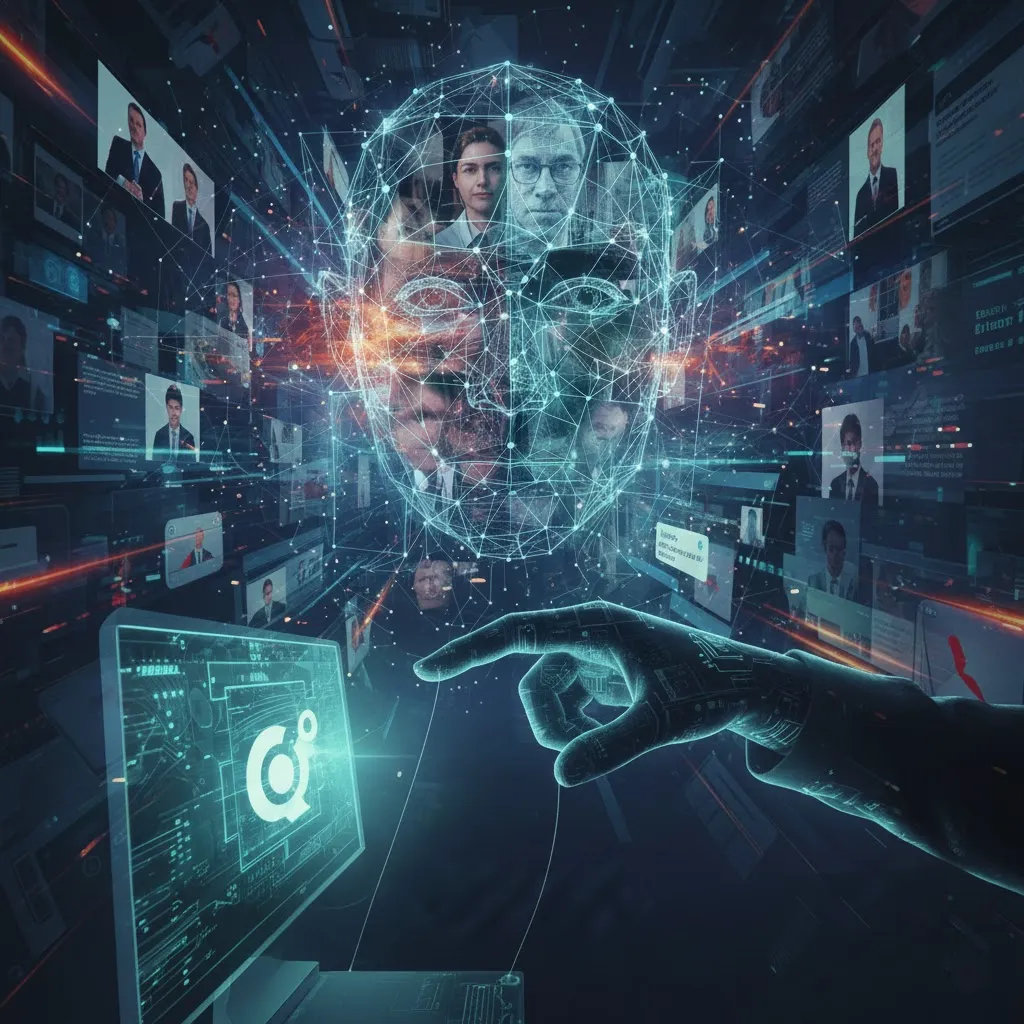
The real danger is in AI’s ability to create entire identities-not just images or sounds, but convincing digital humans who can pass inspection from the very first encounter. These fake identities can appear in hiring processes, customer onboarding, financial transactions, and internal communications, often without raising any flags.
Unlike typical fraud that usually relies on stolen credentials or leaked personal details, deepfake-enabled attacks can create identities from scratch. These are faces that never existed, voices with no real owner, and documents that look authentic because they are designed to fool automated verification systems.
This shifts the economics of fraud. What used to be slow, manual work can now be scaled up quickly.
Key features of deepfake-driven identity fraud include:
- Authentication failures, as biometric systems rely on signals that can be replayed or created artificially
- Rapid scalability, allowing attackers to roll out thousands of fake identities at the same time
- False confidence, where organizations think their controls are working while fraud spreads quietly
Research from 2025 indicates that deepfakes don’t replace older fraud techniques; they amplify them and expose long-standing weaknesses in identity checks and trust systems.
When AI Targets Trust, Not Technology
One of the most alarming aspects of deepfake attacks is that they often succeed without exploiting software vulnerabilities. Instead, they take advantage of assumptions.
Traditional security systems are built on a straightforward idea: once someone is authenticated, they are genuine. Deepfakes disrupt that belief.
AI-generated voices can accurately imitate executives. Fake videos can simulate employees during video calls. Counterfeit documents can pass through onboarding processes not designed to detect false identities.
Once a fake identity is created in a system, the issues multiply. Multi-factor authentication, VPNs, and single sign-on tools begin protecting the attacker rather than the organization.
Security leaders are increasingly cautioning that deepfakes do not compromise systems first; they compromise people.
When a voice sounds right or a face seems familiar, individuals often act quickly, skip verification steps, and assume that authority is legitimate. Attackers exploit urgency, hierarchy, and emotional pressure to bypass rational thinking even before technical safeguards are triggered.
Deepfakes prove particularly effective in situations involving:
- Executive payment approvals
- Help desk interactions
- Hiring and contractor onboarding
- Vendor relationship management
- Customer support escalations
Smaller businesses and those with thin margins are especially at risk, as a single successful scam can have disproportionate financial and operational effects.
An Explosion in Deepfake Activity
Cybersecurity researchers and regulators report a notable increase in incidents linked to deepfakes. The reasons are clear.
AI tools capable of producing realistic audio, video, and images are widely available-often open source, frequently free, and advancing faster than many verification systems. Meanwhile, digital communication has become the standard for business, significantly expanding the attack surface.
Video calls, social media, remote onboarding, and fully digital customer interactions create ample opportunities for impersonation and deception.
What used to take weeks of effort can now be pieced together in minutes. Fraudsters no longer need to create a single believable fake. They can buy or generate complete “persona kits” on demand, including:
- Synthetic facial images
- Voice models trained on public recordings
- Made-up employment histories
- Social media presences
- Supporting identity documents
Data shows that about one in three organizations has already faced some form of deepfake-enabled fraud-a frequency similar to well-established threats like document forgery or classic social engineering.
Deepfake identity spoofing is no longer experimental. It has become a common tactic.
A New Tool, the Same Old Manipulation
Despite the complicated technology behind deepfakes, the deceptive strategies remain familiar.
Attackers still rely on psychological tricks that have been effective for years: fear, urgency, authority, hope, and confusion. AI simply makes these tactics more convincing and scalable.
Security training providers are shifting their focus away from teaching employees how to spot a fake face or voice. Experts say that approach is now outdated.
Visual and audio signals—unnatural mouth movements, strange phrases, distorted sounds—are becoming less noticeable as models improve. Relying on humans to detect these signs is proving to be an ineffective strategy.
Instead, modern training highlights emotional awareness and behavioral cues.
Employees learn to slow down when they feel pressured to act quickly, especially when requests:
- Bypass regular approval processes
- Invoke senior authority
- Create urgency out of nowhere
- Demand unusual secrecy
- Trigger strong emotional reactions
The goal isn’t to turn staff into deepfake experts but to help them see when they are being manipulated.
As trainers often stress, the most reliable sign of deception is not how the media looks or sounds-it’s how it makes you feel.
Why “Looking Closely” Is No Longer Enough
Many security professionals argue that relying on human detection alone is both unrealistic and risky.
Instead of asking employees to determine whether something is real, organizations are encouraged to redesign processes so that trust is never implicit. Verification needs to be built into workflows by default.
This includes:
- Requiring multiple approvals for high-risk transactions
- Blocking attempts to circumvent established controls
- Mandating alternative verification for sensitive requests
- Separating authority from identity whenever possible
For instance, a request that appears to come from a senior executive should still need confirmation through a secure messaging channel or documented approval system.
The guiding principle is simple: if a control depends on someone spotting a fake, it isn’t a control—it’s a gamble.
From Recognition to Verification
A growing number of identity and access management experts agree that the future of security lies in moving from recognition-based trust to verification-based trust.
For decades, organizations have leaned on familiarity: a known face, a trusted voice, a recognizable email signature. Deepfakes exploit that reliance.
The alternative is a model where identity is continuously validated by systems, not assumed by humans.
This means:
- Treating voice and video as untrustworthy inputs
- Designing workflows that need cryptographic or behavioral confirmation
- Validating intent along with identity
- Enforcing limited access even after authentication
In this approach, trust is no longer automatically assumed after login. It is enforced throughout the entire interaction.
When verification replaces recognition, deepfakes lose much of their influence.
Deepfakes as a Stress Test for Digital Trust
Instead of viewing deepfakes as a standalone threat, many experts consider them a stress test—one that reveals how much modern infrastructure still relies on outdated trust assumptions.
Organizations that depend on visual confirmation, voice authority, or static identity checks are finding that those signals can no longer be trusted alone.
The long-term solution is not just better deepfake detection by humans. It involves improved system design.
This includes:
- Stronger identity governance
- Continuous authentication models
- Process-based safeguards that assume deception is possible
- Security cultures that reward verification over speed
In many ways, deepfakes are prompting a long-overdue reevaluation of how trust is built online.
The Road Ahead
As AI keeps evolving, deepfakes will become more convincing, more accessible, and harder to tell apart from reality. The question is not whether organizations will face them, but how prepared they will be when they do.
Those that view deepfakes as merely a media issue—something to catch with sharper eyes or better training—might find themselves repeatedly vulnerable.
Those that see deepfakes as an identity issue—requiring systemic verification, layered controls, and cultural change—will be in a better position to respond.
Ultimately, the challenge is not just technological. It is philosophical.
In a world where seeing and hearing no longer equate to believing, trust must be earned, proven, and enforced each time.