


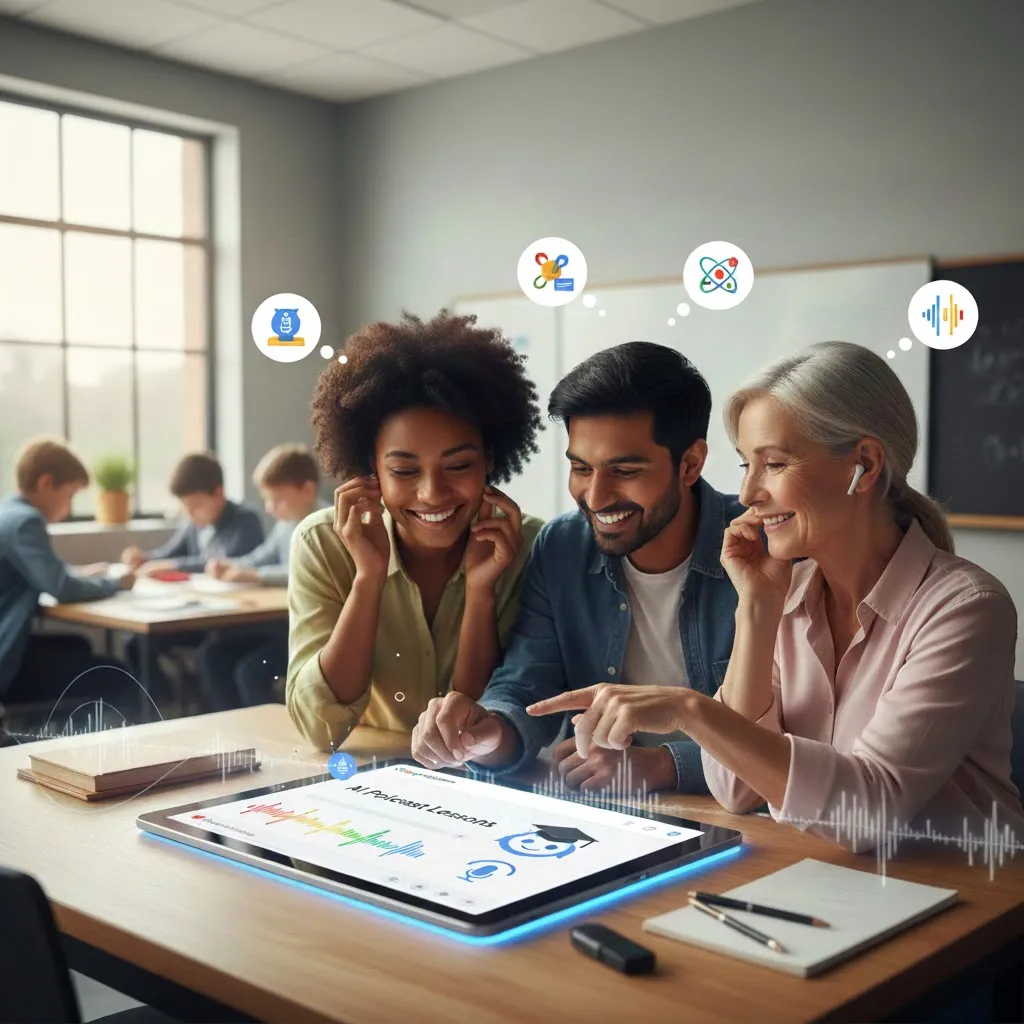
Google is expanding the role of artificial intelligence in education with a new feature that allows teachers to turn lesson materials into podcast-style audio episodes directly within Google Classroom. Using the company’s Gemini AI, this tool helps educators present academic content in a way that reflects how many students consume information outside of school.
This feature shows Google’s plan to incorporate generative AI more deeply into its education system while also responding to changing student media habits. Audio-based learning has been popular in informal settings and is now being introduced as a structured classroom resource. This could complement traditional teaching methods rather than replace them.
Turning Classroom Content Into Audio Experiences
The new feature is found in the Gemini tab in Google Classroom, where educators can convert existing materials into conversational audio content. Teachers start by setting basic parameters like grade level, subject area, and learning goals. After that, they can customize the lesson by choosing the number of speakers and the style of conversation.
The audio can be generated in several formats, including interviews, panel discussions, or casual chats similar to popular educational podcasts. Google’s goal is to make academic material feel more relatable and engaging, especially for students who prefer learning through streaming platforms and on-demand audio.
Instead of creating a simple reading of the written material, the system generates dialogue that sounds like real conversations. This method aims to help students process information more naturally, which may improve their understanding and retention.
Who Can Use the Feature
Google has made the podcast generation tool available to institutions that subscribe to Workspace for Education Fundamentals, Standard, and Plus. However, access is limited.
Only educators and staff members aged 18 and over can use this feature, with permissions controlled by school administrators through the Google Admin console. This rule reflects ongoing concerns about AI use in educational settings and the need for oversight when introducing new technologies in classrooms.
Administrators can enable or disable access based on school policies, making sure that schools control how and where AI-generated content is utilized.
Why Audio Learning Matters Right Now
The introduction of podcast-style lessons fits well with how younger generations consume information. Recent statistics show that millions of Gen Z listeners in the United States listen to podcasts each month, covering topics from entertainment to education.
Many universities have begun to use podcasts to extend lectures, share research, and engage students beyond traditional classrooms. At the same time, students are turning to audio content to help with their studies, often preferring explanations that feel more conversational than textbooks or academic articles.
Google seems to believe that bringing this familiar format directly into Classroom could make it easier for students to engage, especially those who find it hard to handle dense reading materials or lengthy video lectures.
Practical Benefits for Students and Teachers
Audio lessons offer several benefits that traditional formats might not provide. Students can listen to lessons while commuting, exercising, or reviewing for exams. This flexibility allows learning to go beyond the classroom and fit into daily routines.
For students who miss class due to illness or other commitments, podcast-style lessons provide an easy way to catch up without relying solely on notes or recordings of live lectures. Audio also supports repetition, allowing learners to replay complex ideas until they understand the material.
From a teaching perspective, this tool offers teachers another method to present content. Instead of using only slides, readings, or spoken lectures, educators can mix different formats to meet various learning preferences.
The Ongoing Debate Around AI in Education
Despite its potential, introducing AI-generated content into classrooms continues to spark discussion. Many educators worry that students may become too reliant on generative AI tools for assignments, which could harm critical thinking and originality.
The rise of tools like ChatGPT has already prompted schools and universities to rethink how they assess students, handle plagiarism, and define academic honesty. Google’s podcast feature arrives at a time when the education sector is still working on how to integrate AI responsibly.
Rather than presenting the tool as a shortcut for students, Google emphasizes that the feature is meant primarily for educators. Teachers must review, edit, and approve all AI-generated audio before sharing it with students.
Human Oversight Remains Central
Google has stressed the importance of human review for all AI-generated content. The company acknowledges that generative models can produce errors, oversimplifications, or phrasing that may not meet classroom standards.
Educators are encouraged to listen to and edit podcast episodes before sharing them, making sure they are accurate, appropriate, and in the right tone for their students. This requirement emphasizes that AI is meant to assist rather than replace human judgment.
By placing responsibility on teachers, Google seeks to balance innovation with accountability, reflecting a broader industry understanding that AI cannot yet replace professional judgment in educational settings.
Administrative Controls and Safeguards
Access to the feature is managed through Google’s Admin console, where school leaders control permissions and enforce age restrictions. Documentation in Google’s Help Center outlines instructions, usage guidelines, and best practices for educators using the tool.
These safeguards aim to give institutions confidence that AI features can be implemented smoothly and responsibly. As schools face scrutiny from parents, regulators, and policymakers, such controls are becoming necessary for AI adoption.
Part of a Larger Gemini Education Strategy
The podcast tool is the latest addition to Google’s expanding Gemini presence in education. In 2025, the company introduced Gemini across all Workspace for Education editions, establishing the AI assistant as a central hub for content creation, lesson planning, and classroom support.
By adding audio generation to Classroom, Google signals that AI-generated content can go beyond just text or visuals. The company is exploring multimodal approaches that align with real-world learning behaviors.
This move also places Google in competition with other education technology providers developing AI-driven lesson creation, tutoring tools, and adaptive learning systems.
Limitations of the Podcast Format
While audio lessons offer flexibility, they are not a one-size-fits-all solution. Certain subjects, especially those with complex equations, diagrams, or visual analysis, may not work well with audio-only formats.
Visual learners might struggle without accompanying materials, and some concepts require written notation or graphs to be fully understood. Google does not present the podcast feature as a replacement for traditional resources; rather, it is meant to be a supplement.
Educators are expected to determine when audio is suitable and how it fits into a larger instructional strategy that might include readings, videos, assignments, and in-person discussions.
The Teacher’s Role in AI-Enhanced Classrooms
Google’s plan places educators at the forefront of AI adoption. Teachers decide what content is generated, how it is framed, and whether it meets their teaching goals.
This model recognizes an important fact: while AI can help create content, it cannot assess classroom dynamics, student needs, or curriculum standards on its own. Effective use relies on careful integration rather than complete automation.
By requiring educators to curate and refine AI outputs, Google reinforces the idea that technology should enhance teaching-not take its place.
How Students Will Respond Remains an Open Question
Whether AI-generated podcast lessons provide lasting educational value remains uncertain. Familiarity with this format may boost initial engagement, but lasting impact will depend on content quality and how well audio lessons support other teaching methods.
Student feedback and classroom results will ultimately determine if this approach becomes a regular part of digital learning or stays a niche tool. As with many AI-driven changes in education, real-world use will provide the clearest insights.
A Cautious Step Toward Audio-First Learning
Google’s podcast feature represents a careful but significant step in rethinking how educational content is delivered. By combining generative AI with a format students already enjoy, the company is exploring whether learning can become more flexible without losing rigor.
The success of this initiative will depend on careful implementation, responsible supervision, and ongoing collaboration between educators and technology providers. As classrooms continue to change alongside AI, tools like this will help shape what modern learning looks like-both inside and outside school.