

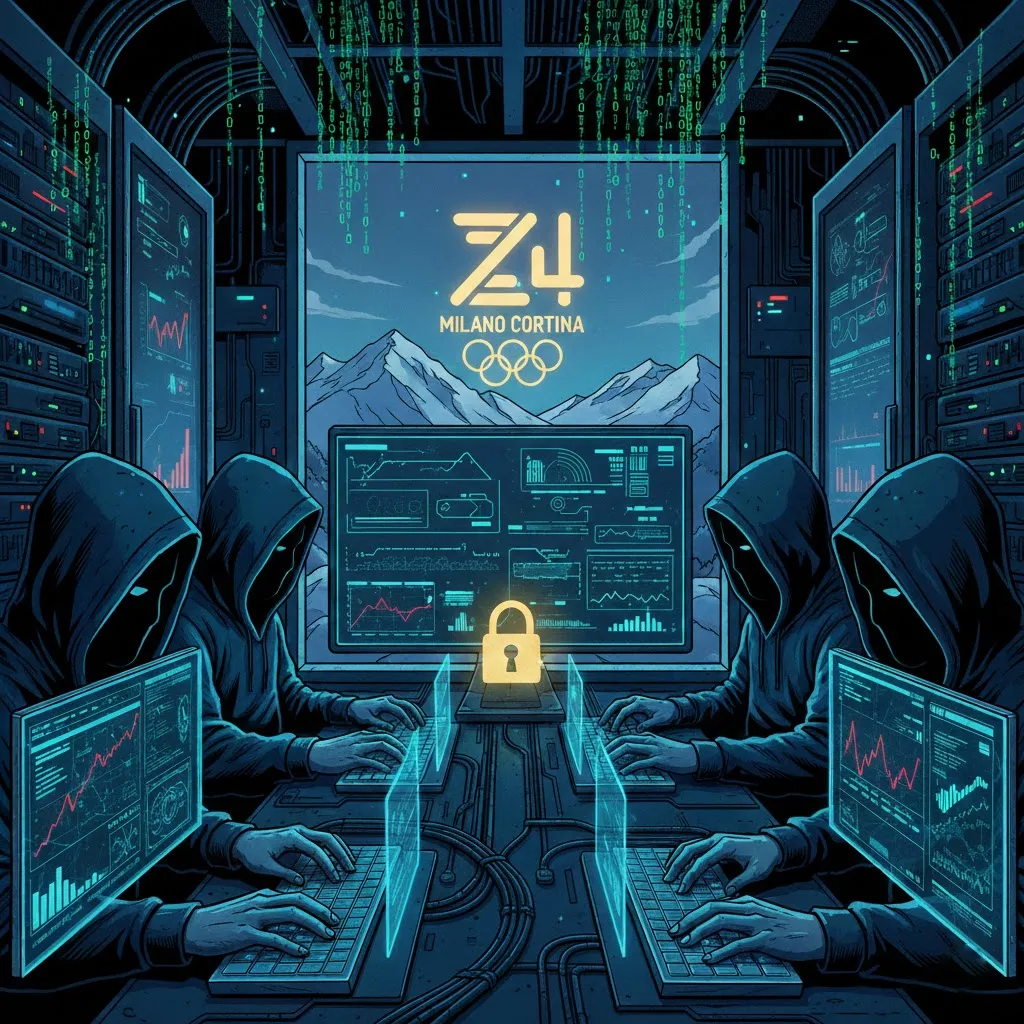
As the world gets ready to focus on the snowy slopes and ice rinks of northern Italy, cybersecurity experts are issuing a serious warning: the Milano Cortina 2026 Winter Olympics will draw not only elite athletes and global audiences but also a wide range of cybercriminals.
From nation-state intelligence operations and ideologically driven hacktivists to ransomware gangs and opportunistic scammers, the Games are set to become a key target for digital threats, unlike any other sporting event. A recent report from Palo Alto Networks’ Unit 42 threat intelligence group presents a concerning scenario where cyberattacks exploit not just technology but human psychology, timing, and worldwide attention.
A Perfect Storm for Cybercrime
Large international events have long attracted cyber activity, but the Olympics are in a league of their own. The scale is unmatched: millions of spectators, thousands of athletes, intricate logistics, huge financial flows, and global media coverage all crammed into a tightly organized timeframe.
Security analysts call this mix a “target-rich environment.”
Every digital interaction linked to the Games-ticket purchases, travel bookings, accommodation payments, streaming services, mobile apps, QR codes, and social media activity-opens potential entry points for attackers. Even a small disruption can lead to transportation delays, access issues at venues, or interruptions in live broadcasts.
Attackers understand this. They know that defenders have little tolerance for downtime.
“High-profile events create ideal conditions for extortion,” said a cybersecurity executive who focuses on critical infrastructure. “When every minute of disruption has visible consequences, pressure quickly builds. That’s exactly what criminals take advantage of.”
Ransomware and Financial Crime Take Center Stage
According to Unit 42, ransomware groups are likely to be some of the most active threat actors during the Games. These attacks may not always target Olympic organizers directly. Instead, criminals often go after suppliers, vendors, hospitality providers, and local service operators whose systems are less secure but still vital.
But ransomware is just one part of the equation.
Financial crimes are expected to rise sharply during the Winter Games, driven by scams that thrive on excitement, urgency, and trust. Fake ticket websites, fraudulent travel offers, bogus accommodation listings, and counterfeit streaming services are likely to swarm the internet in the months leading up to and during the event.
Attackers will make use of:
- Fake websites mimicking official Olympic platforms
- QR codes placed on posters, emails, and social media
- Fraudulent mobile apps claiming to offer schedules or live coverage
- Impersonation of airlines, hotels, sponsors, and organizers
Even experienced users can fall victim when scams are timed perfectly around major announcements, medal events, or last-minute travel changes.
Nation-State Actors Enter the Arena
Beyond financial motives, geopolitical interests come into play.
The Olympics bring together heads of state, senior politicians, corporate executives, defense contractors, and influential public figures all in one place. For nation-state intelligence agencies, this gathering of high-value targets is a rare opportunity.
Security researchers warn that well-funded state-backed actors might try to:
- Compromise devices belonging to VIPs or their staff
- Conduct surveillance through phishing or harmful apps
- Exploit insecure Wi-Fi networks near venues and hotels
- Use spyware through fake sponsorship or networking invitations
The stakes go beyond just financial theft. Intelligence gathered during these events can have long-term strategic value, especially amid heightened global tensions.
The ongoing geopolitical situation increases the risk. Current conflicts, sanctions, and diplomatic issues make the Games an appealing backdrop for cyber operations aimed at sending political messages or gathering sensitive intelligence.
Hacktivists Seek Visibility and Impact
Hacktivist groups are also expected to show their presence.
For ideologically motivated individuals, few platforms offer the same visibility as the Olympics. Billions of viewers, nonstop media coverage, and constant social media activity provide unmatched reach.
These groups may focus on:
- Website defacements
- Data leaks targeting sponsors or organizers
- Distributed denial-of-service (DDoS) attacks
- Misinformation campaigns linked to political or social issues
Their goal isn’t always to create disruption for its own sake, but to gain attention. In that regard, even failed attacks can generate headlines or create doubt.
Scams at Industrial Scale
Cybersecurity experts emphasize that modern Olympic scams aren’t crude or obvious anymore. Generative AI has significantly lowered the barrier to entry for cybercrime, enabling fraudsters to scale their operations at an alarming rate.
With AI tools, criminals can create:
- Convincing phishing emails in multiple languages
- Realistic fake websites that imitate official branding
- Deepfake audio or video impersonating athletes or officials
- Automated chatbots that interact with victims in real time
One analyst bluntly noted, “Scams no longer target transactions. They target people.”
This people-focused approach means attackers tap into emotional triggers-urgency, excitement, disappointment, generosity, or fear-rather than just technical weaknesses.
The Full Spectrum of Olympic-Themed Fraud
Experts foresee a wide range of scams directly linked to the Games, including:
- Fake ticket and travel sales: Websites offering “last-minute” deals that vanish once payment is made
- Bogus streaming links: Promises of free or premium Olympic coverage that deliver malware instead
- Impersonation scams: Criminals posing as Olympic officials, sponsors, or national teams to solicit payments or sensitive information
- Charity fraud: Fake fundraising campaigns tied to athletes, national causes, or humanitarian efforts
- Contest and prize scams: Fraudulent giveaways designed to gather personal data or entry fees
The emotional appeal of the Olympics-national pride, global unity, personal inspiration-makes these schemes especially effective.
Social Media as an Attack Vector
Social platforms will play a key role in Olympic-related cybercrime.
Attackers keep an eye on public posts for clues: travel announcements, complaints about flights or hotels, excitement about attending events. Each post presents context that can be exploited.
If someone shares they are traveling, attackers might impersonate them to reach out to colleagues. If a user shares a booking issue, scammers can step in pretending to provide customer support.
Timing is crucial. Messages sent during medal ceremonies, opening events, or breaking news seem more credible because users are already emotionally engaged.
Mobile Devices: The Weakest Link
The modern Olympics focus heavily on mobile. Fans stream highlights on their phones, scan QR codes at venues, and use apps for navigation, payments, and updates.
This creates significant risk.
Fake betting apps, harmful streaming services, and fraudulent login pages often target mobile devices, where typical security measures are weaker. Employees attending or watching the events may inadvertently compromise corporate networks by clicking on harmful links or installing tainted apps on personal devices used for work.
Security experts increasingly warn that mobile endpoints are a significant blind spot in company cybersecurity.
Workplace Risks Rise With Olympic Fever
The cyber risk does not end at the stadium gates.
During major events, employees are more likely to:
- Stream live events during work hours
- Engage on social media using company devices
- Click on Olympic-themed emails or links
- Download unofficial apps for updates or betting
Threat actors capitalize on these behaviors. Phishing campaigns often coincide with major competitions or medal announcements, boosting the chances of engagement.
Organizations are encouraged to adopt mobile-first and user-focused security strategies that can detect threats in real time, both on and off corporate networks.
Olympic Infrastructure: Well Defended, But Not Untouchable
Despite the increased threat landscape, experts stress that Olympic organizers aren’t lax.
Large events usually involve years of planning, layered security measures, and extensive backups. Key systems-like scoring, broadcasting, and access control-are heavily monitored and separated.
Therefore, many attackers focus on weaker peripheral systems and the public rather than attempting to breach the main Olympic framework directly.
Still, even indirect attacks can have a significant impact when public trust and global focus are on the line.
The Psychological Dimension of Cyber Risk
Perhaps the biggest vulnerability during the Winter Games isn’t technical but psychological.
Attackers take advantage of:
- Urgency (“Limited tickets available”)
- Trust in well-known brands and institutions
- Emotional investment in athletes and national teams
- Distraction from nonstop coverage and travel
Security leaders increasingly argue that awareness and behavior are just as critical as firewalls and encryption during events like the Olympics.
Organizations involved with the Games-whether sponsors, vendors, or service providers-are advised to assume they are targets and actively monitor for impersonation, brand abuse, and new threat narratives.
A Global Event, A Global Threat Landscape
The Milano Cortina 2026 Winter Olympics will celebrate athletic excellence, cultural exchange, and international cooperation. However, they will also highlight the realities of a digitally connected world where attention itself is a valuable asset.
Cybercriminals thrive on visibility, urgency, and trust-all of which the Olympics generate intensely.
As billions engage, defenders face the challenge of staying ahead and protecting not just networks and systems but also people-fans, athletes, employees, and organizations-from threats that increasingly merge technology with human manipulation.
In the competition surrounding the Games, the contest will not only occur on the ice and snow. It will also take place quietly, relentlessly, and globally across the digital arena.